
How to Reduce Beard Frizz Without Overthinking It
Your beard can look dialed in at 8 a.m. and resemble a startled woodland creature by lunch. If you’re wondering how to reduce beard frizz, the answer usually isn’t more effort. It’s better timing, less stripping, and a few tools that keep your facial hair hydrated and pointed in the same general direction.
Frizz is not a sign that your beard is doomed. It is your beard asking for moisture, conditioning, and a little leadership. Give it those things consistently, and even a wiry, stubborn beard can look softer, fuller, and far less likely to challenge the wind to a duel.
Why Your Beard Gets Frizzy in the First Place
Beard hair is naturally coarser than the hair on your head. It grows in different directions, bends at different angles, and pulls moisture away from the skin underneath. That makes it especially vulnerable to dryness, rough texture, and random flyaways.
Hot showers, harsh soap, frequent washing, and rough towel-drying can all make the problem worse. So can dry winter air, a humid summer day, and growing your beard past the point where your natural skin oils can keep up. Genetics also gets a vote. Some beards are naturally straighter and easier to manage; others were forged to be wild.
The goal is not to turn your beard into a helmet. A great beard should still have movement. You just want the hair to look intentional rather than electrically charged.
How to Reduce Beard Frizz With a Simple Routine
The fastest route to a calmer beard is a routine you will actually use. You do not need a shelf full of mystery jars or a 17-step ceremony conducted under a full moon. Start with clean hair, add moisture while it is slightly damp, then shape it before it dries into chaos.
Wash without stripping it bare
Washing your beard every day with regular body soap is a common frizz factory. Traditional soaps can strip away the oils that help beard hair stay flexible, leaving it dry, scratchy, and eager to puff outward.
Wash your beard two or three times a week with a gentle beard wash or mild cleanser. If you work a dusty job, train hard, or use a lot of styling product, you may need to wash more often. That is fine. Just avoid treating your beard like a greasy cast-iron skillet that needs to be scoured clean daily.
Use lukewarm water instead of blazing-hot water. Hot water feels good, but it can dry out both your skin and beard. Rinse thoroughly, because leftover cleanser can make hair feel stiff and look dull.
Dry it like a man with somewhere to be
Do not scrub your beard with a towel like you are trying to start a fire. Rough drying lifts the hair cuticle and creates the very texture you are trying to defeat.
Instead, gently press or pat the beard with a clean towel until it is damp, not dripping. That damp stage is prime territory for beard oil. Hair absorbs and holds onto moisture better when it is not bone-dry, while oil helps slow down moisture loss as the beard finishes drying.
If you use a blow dryer, keep it on low or medium heat and hold it several inches from your face. Aim the airflow downward, following the direction you want your beard to sit. High heat can make a beard feel dry and brittle fast, so save the flamethrower setting for your garage, not your jawline.
Use beard oil for softness and hydration support
Beard oil is the workhorse for frizz caused by dryness. It conditions the beard, softens rough strands, and helps reduce the itchy, flaky skin situation happening underneath. A softer beard is easier to comb, easier to shape, and much less likely to fan out like it has its own battle plan.
Put a few drops in your palm after showering, then rub your hands together and work the oil down to the skin first. From there, pull it through the length of your beard. A short beard may need only two or three drops. A longer, denser beard may need more. Start small, then add another drop or two if the hair still feels dry.
Oil is not meant to make your beard look wet or greasy. If it does, you probably used too much. More product is not always more power, Viking.
Add beard balm when you need control
Oil conditions. Beard balm conditions and adds hold. If your beard is medium to long, naturally wiry, or prone to sticking straight out near the cheeks, balm is often the missing piece.
Warm a small amount between your palms until it softens, then distribute it through the beard. Use your hands to guide the overall shape and follow with a comb or brush. The waxes and butters in a quality balm give flyaways a reason to settle down without making your beard feel stiff.
There is a trade-off: balm can feel too heavy on a very short beard or fine facial hair. In that case, use beard oil alone for daily softness, and reach for a tiny amount of balm only when you want extra shape for work, a date, or photos where your beard needs to report for duty.
Brush and comb with a purpose
A beard brush does more than make you look like a man who owns a beard brush. It helps distribute oil, gently trains the hair to grow and lie in a more consistent direction, and gives the beard a fuller, more controlled look.
Use a beard brush on shorter to medium-length beards, especially when you want to guide hairs downward and outward from the cheeks. A wide-tooth comb is often better for longer or curlier beards because it can detangle without yanking through knots. Start at the ends and work upward if you hit snags. Ripping through a tangle causes breakage, which creates more short, frizzy hairs later.
Brush or comb after applying oil or balm, not before. Dry brushing a dry beard can create static and make the situation worse. That is not grooming. That is mutiny.
Give Your Beard Time to Learn the Formation
Frizz is often worst during the early growth stage, when hairs are too short to weigh themselves down but long enough to point in every direction. This awkward phase is normal. Resist the urge to trim every uneven hair the moment it appears.
Let your beard gain enough length to show its natural pattern, then maintain the outline with careful trims. Cleaning up the neckline and obvious cheek strays can make a beard look sharper without sacrificing the length that helps it settle. If you are growing a fuller beard, a professional trim every few months can also remove split, damaged ends while preserving your overall progress.
Consistency matters more than one heroic grooming session. A beard that gets a little moisture and direction each morning usually behaves better than one that gets ignored for a week and then hit with half a bottle of product before Saturday night.
Watch for the Sneaky Frizz Triggers
Sometimes the problem is not your beard routine. It is everything around it. A cotton pillowcase can pull moisture from hair overnight, so switching to a smoother pillowcase may help if you wake up looking particularly feral. Hard water can leave mineral buildup that makes hair feel rough, while dry indoor heat can make a healthy beard suddenly feel thirsty.
Your diet and hydration play supporting roles, too. Drinking water will not magically straighten a beard, but being chronically dehydrated does not do your skin or hair any favors. If your beard is suddenly much drier than usual, your skin is irritated, or you have persistent flaking, consider whether a new cleanser, medication, or skin condition may be involved.
Also, skip the temptation to use regular hair gel or heavy pomade in your beard. These can leave it crunchy, flaky, or difficult to wash out. Beard hair has its own rules. Treat it accordingly.
Build a Frizz-Fighting Setup That Sticks
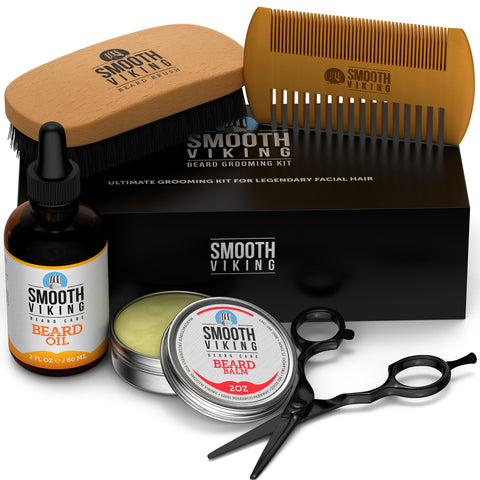
For most men, the practical setup is simple: a gentle wash a few times per week, beard oil after showering, a brush or comb to direct the hair, and beard balm when you need extra hold. Smooth Viking products are built for exactly this kind of no-nonsense routine: fewer moving parts, more controlled beard.
The best amount of product and styling effort depends on your length, density, climate, and natural texture. A short beard in Florida may need lighter application than a long beard facing a dry Minnesota winter. Pay attention to how your beard feels, not just how it looks in the mirror. Soft, flexible hair is generally well-conditioned hair.
Your beard does not need to be perfect to look powerful. Give it moisture, give it direction, and give it a few minutes before you head out. The wildness can stay. It just needs to look like you invited it.