
Best Beard Comb for Styling: Find Your Fit
Your beard can be freshly washed, oiled, and full of promise, then one bad comb turns it into a face-sized tumbleweed. The best beard comb for styling is not the fanciest tool in the drawer. It is the one that moves through your beard without snagging, helps product spread evenly, and gives you control before your whiskers start plotting a mutiny.
A comb is a small piece of your grooming routine, but it does big work. It trains hairs to sit in the direction you want, separates clumps, helps expose uneven spots, and puts your beard balm or oil where it belongs. Choose the wrong one, and you get static, breakage, tugging, and the familiar feeling that your beard has won the argument.
What Makes the Best Beard Comb for Styling?
Start with the teeth. A beard comb needs teeth that are smooth, sturdy, and properly spaced for your facial hair. Cheap plastic combs often have rough seams left from the molding process. Those tiny rough edges catch on beard hair, create drag, and can pull out hairs that had no intention of leaving the crew.
A quality beard comb should glide rather than rake. You want enough firmness to guide a stubborn beard, but not so much resistance that every pass feels like clearing brush with a garden tool. Look closely at the teeth, especially if your beard is coarse or curly. Smooth, rounded tips are friendlier to both your hair and the skin beneath it.
Material matters too, though there is no single champion for every beard. Wood has a classic, rugged feel and can help distribute natural oils without building much static. Cellulose acetate is durable, polished, and generally smoother than bargain-bin plastic. Metal is tough and compact, but it can feel harsh if the teeth are too narrow or sharp. The right pick depends on how your beard behaves when it is dry, damp, or loaded with balm.
Size is the other part of the equation. A small comb belongs in a pocket, gym bag, or truck console. A larger comb gives you a better grip and more control at the bathroom mirror. One is built for damage control after lunch. The other is for the daily ritual that keeps your beard looking like it has a commanding officer.
Choose Your Comb by Beard Length and Texture
The best beard comb for styling a short beard is usually different from the best choice for a long, thick one. Match the tooth spacing to the job instead of buying based on looks alone.
Short Beards Need Precision
For stubble through roughly two inches of growth, a fine-tooth or medium-tooth comb gives you more control. It helps direct hairs along the cheeks and jaw, keeps the mustache from wandering into your mouth, and works beard balm into shorter growth. Go gently. Short hairs can still snag, especially when they are dry or curly.
A compact comb is a smart fit here because the smaller profile lets you work around the mustache, sideburns, and neckline. It also makes touch-ups easy when you need to look less just-rolled-out-of-a-longship and more ready for the meeting.
Medium Beards Need Versatility
Once your beard has real volume, medium-spaced teeth are often the sweet spot. They can pass through enough hair to detangle it while still giving you shaping control. If your beard is fairly straight, medium teeth may be all you need for your main styling tool.
For wiry, wavy, or curly growth, use the wider side of a dual-sided comb to loosen knots first. Then switch to the finer side to guide the outline and mustache. Trying to force fine teeth through a tangled beard is not grooming. It is a declaration of war against your own face.
Long or Thick Beards Need Room to Move
Long, dense beards need wide teeth. The wider gaps let hair pass through without yanking from the root, which means less breakage and a much less miserable morning. Work in sections, starting at the ends and moving upward toward the roots as knots release.
A long beard can also benefit from owning two tools: a wide-tooth comb for detangling and a medium-tooth comb for final shaping. That is not high maintenance. That is bringing the right axe to the right tree.
Wood, Acetate, or Metal?
Wooden combs earn their place because they feel good in hand and tend to reduce the static that makes dry beard hairs stand at attention. They are especially useful in colder, drier weather, when a plastic comb can turn your jawline into a science experiment. Keep a wooden comb dry and clean it regularly so product buildup does not settle between the teeth.
Cellulose acetate combs are a strong everyday option. The material can be polished to a very smooth finish, which makes it easier to move through dense facial hair. It is also more durable around water than wood, so it suits guys who comb right after a shower or keep their tools near the sink.
Metal combs are built for portability and toughness. They are great for a quick mustache pass or a pocket-ready touch-up, but take a close look at the tooth design. A metal comb with sharp edges or extremely tight spacing can be too aggressive on a thick beard. Tough is good. Needlessly punishing is not.
How to Style a Beard Without Pulling It Apart
Combing technique matters as much as the comb itself. Never attack a dry, tangled beard at full force. If it feels rough, add a few drops of beard oil first, rub it between your palms, and work it through the beard with your hands. This gives the comb some slip and helps prevent snapping and pulling.
Start at the ends of the beard, especially if you have length. Use short, patient strokes to free tangles, then move gradually higher. Once the beard is detangled, comb downward and outward from the cheeks toward the jaw to create a fuller, more intentional shape. For a longer beard, guide the front slightly forward before directing it down. That adds presence without making your beard look like it is trying to escape your chin.
Use beard balm when you need hold, definition, or protection from a humid day. Warm a small amount between your hands, work it through the beard, then comb it into shape. The comb distributes the balm and makes the hold look natural instead of stiff. If your beard gets flat on one side, lift that section with the comb while the balm is still workable, then guide it where you want it to live.
Your mustache deserves separate attention. Comb it outward from the center to separate hairs, then direct the ends away from your lips. A fine-tooth comb gives more control here, particularly if you are keeping a clean, classic mustache shape rather than letting it raid your coffee.
Signs Your Beard Comb Is the Wrong One
Your tool should make styling easier. If it creates more chaos, it is time to swap it out. Watch for these four signs:
- It catches and pulls every time you pass through the same area.
- Your beard gets staticky, frizzy, or puffed up after combing.
- The teeth are too tight to reach through your beard without force.
- The comb is too small, flimsy, or awkward to control comfortably.
Build a Better Two-Minute Beard Routine
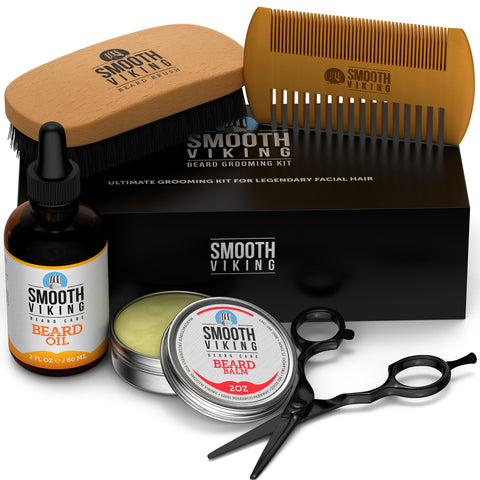
You do not need a bathroom counter packed with mystery jars. For most beards, the winning routine is simple: clean the beard when it needs it, apply oil for softness and skin comfort, use balm when you want shape and hold, then comb with purpose. Smooth Viking beard tools and styling products are made for exactly this kind of low-fuss routine - practical control, no grooming dissertation required.
The best time to comb is after a shower once your beard is towel-damp, not dripping wet. Hair is easier to guide then, and your styling product spreads more evenly. If you are combing later in the day, use a light touch. A quick pass to reset the mustache or tame the jawline is plenty. Repeated hard combing can create more frizz than it fixes.
Pick a comb that fits your beard as it is now, not the beard you had six months ago or the beard you plan to grow someday. Fine teeth bring detail. Wide teeth bring relief to thick growth. Smooth materials prevent unnecessary tugging. Put the right one in your hand, give your beard two focused minutes, and walk out looking like you meant to be noticed.