
Beard Growth Grooming Tips That Actually Work
A better beard is rarely about waiting around for magic whiskers to appear. It is about making the beard you have look healthier, fuller, and far less like it lost a fight with a hedge trimmer. These beard growth grooming tips focus on the part you can control: your skin, your routine, your tools, and the way you shape what grows.
Genetics set the ceiling. Grooming decides whether your beard looks like a strong contender or a tired collection of crumbs. The good news? You do not need a 14-step ritual or a bathroom cabinet built like an apothecary. You need a few smart moves done consistently.
Start at the Skin, Not the Whiskers
Beard hair grows out of skin, so a dry, irritated, flaky face is not doing your beard any favors. If your beard feels itchy or sheds flakes onto your shirt, the problem may be under the beard instead of in it.
Wash your face and beard regularly, especially after workouts, long days outside, or meals that involved sauce with ambition. But do not scrub your beard into submission with harsh soap twice a day. Overwashing strips away natural oils, which can leave both the skin and beard feeling dry, rough, and irritated.
Use lukewarm water, not lava-hot water. Pat your beard dry instead of attacking it with a towel. Once it is slightly damp, work a few drops of beard oil down to the skin with your fingertips. The goal is not to make your face look like it was glazed for a photo shoot. The goal is comfortable skin and softer hair.
If you are growing a new beard, this step matters even more. Early growth can be itchy because short, stiff hairs rub against the skin. Moisturizing the skin beneath them helps make the awkward phase less miserable, which means you are less likely to shave the whole thing off at 11:47 p.m. on a Tuesday.
Give It Time Before You Start Judging It
A beard does not submit its final form in two weeks. Growth rates vary, but many men need four to six weeks before they can accurately see their natural coverage, direction, and density. Patchy-looking areas can become less obvious once surrounding hair gets longer enough to cover them.
That does not mean every beard will turn into a mountain-man masterpiece. Some beards grow dense on the chin and lighter on the cheeks. Others grow fast but curl wildly. Your strongest move is choosing a style that works with your natural pattern rather than chasing a face shape that belongs to somebody else.
During the first month, resist the urge to trim every uneven spot. Keep the neckline clean if you want to look intentional, but let overall length develop. Constantly cutting the beard short will not make it grow faster. That old myth has survived longer than it deserves.
Define the Neckline Without Going Too High
A clean neckline makes a growing beard look maintained, even when the rest is still finding its footing. As a general rule, place the neckline about one to two finger widths above your Adam's apple, then follow a gentle curve toward the corners of your jaw.
Go too low and the beard can look untamed. Go too high and it can look like your beard is trying to escape your face. When in doubt, take off less. You can always trim more tomorrow. You cannot glue whiskers back on before Friday night.
Use Beard Oil for Softness, Balm for Control
Beard oil and beard balm are teammates, not rivals. Oil is best for conditioning the beard and the skin underneath. It helps reduce that dry, scratchy feeling and gives coarse facial hair a healthier look. It is especially useful for short to medium beards and anyone dealing with beard itch.
Beard balm adds more control. It conditions hair too, but its thicker texture can help guide flyaways, shape a medium or longer beard, and make a beard look more deliberately put together. If your beard grows outward like it is preparing for battle, balm gives you a little tactical advantage.
Start small with either product. Warm it between your palms, work it through from the skin outward, then comb or brush it into place. Too much product can make your beard feel heavy or greasy, and nobody wants a beard that could double as a frying pan.
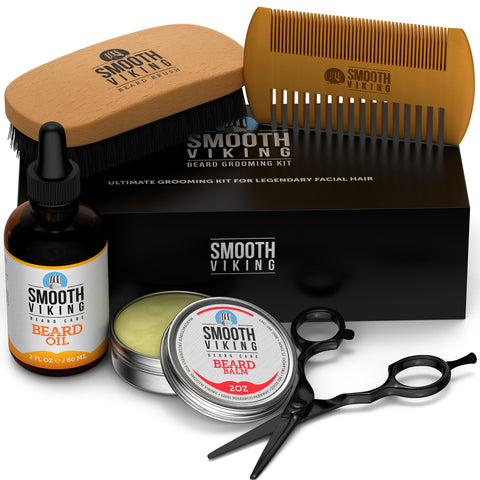
Smooth Viking beard oil and balm fit nicely into this kind of no-fuss routine: hydrate, shape, get on with your day.
Comb and Brush With a Purpose
A comb is not just for making your beard look respectable before a meeting. Regular combing helps separate tangled hairs, distribute product, and train hair to sit in a more flattering direction. For longer beards, use a wide-tooth comb first to work through knots gently. Start at the ends, then move upward toward the roots to avoid yanking out hairs.
A beard brush is useful for shorter to medium lengths, especially if your beard looks puffy or uneven. Brush downward and outward in the direction you want your beard to grow. This helps lay down strays and can make lighter areas appear more blended.
Do not aggressively brush a soaking-wet beard. Wet hair is more prone to stretching and breaking. Let it air dry or gently towel dry first, then apply oil or balm and shape it when it is damp, not dripping.
Trim for Shape, Not for Punishment
Trimming is one of the most useful beard growth grooming tips because it keeps your beard from looking ragged while you wait for more length. The trick is knowing what to trim.
Focus on obvious split ends, stray hairs, an overgrown mustache, and the outline of your cheeks and neckline. Avoid taking big chunks off the bulk of your beard unless you have a clear style in mind. A beard can look fuller simply because its perimeter is tidy and its length is balanced.
For most men, a light cleanup every one to two weeks is plenty. If you wear a short beard, you may need to sharpen your lines more often. If you are growing it out, go easy on the scissors and clippers. Let the beard build enough length to reveal its real shape.
Keep the Mustache Out of Your Lunch
Your mustache has a special talent for looking great in the mirror and terrible halfway through a burger. Trim the hairs that hang over your upper lip, preferably when the mustache is dry and resting naturally. Cutting it wet can lead to an accidental too-short trim once it dries.
If your mustache is longer, use a small amount of balm to sweep it sideways or downward. The result looks cleaner, feels more comfortable, and keeps coffee foam from becoming a permanent accessory.
Support Growth With the Boring Stuff That Works
No oil, balm, comb, or legendary Viking chant can override poor sleep, a weak diet, or constant stress. Your beard is hair, and hair responds best when your body is getting the basic support it needs.
Eat enough protein, since hair is made largely of keratin. Include a range of nutrient-dense foods, drink water throughout the day, and get regular sleep. If you suspect a nutritional deficiency or are suddenly losing hair, talk to a medical professional instead of buying every miracle supplement that appears in your feed.
Exercise and stress management can help your overall health, too, but do not treat them as instant beard-growth hacks. The payoff is steadier: better energy, better recovery, healthier-looking skin, and a routine you can actually maintain.
Work With Your Beard's Personality
Straight beards, curly beards, thin beards, dense beards - they all need slightly different handling. A wiry, curly beard may need more conditioning and more patient detangling. A fine beard may look better with a lighter product and a shorter, sharper shape. A dense beard can handle balm and brushing to keep its volume from swallowing your jawline.
Face shape matters, but it is not a set of handcuffs. More length at the chin can add visual length to a round face. Keeping the sides tighter can make a broad beard look cleaner. If your face is already long, avoid adding too much extra length below the chin. Test small adjustments and pay attention to what looks right in normal lighting, not just your bathroom mirror at midnight.
Your beard does not have to be the biggest in the room. It just needs to look like it belongs to a man who has his act together. Keep the skin comfortable, give the hair some direction, trim with restraint, and let consistency do the heavy lifting. That is how you conquer your face without turning grooming into a second job.