
Men's Slick Back Guide for Hair That Holds
A slick back can make a regular haircut look like you have a board meeting, a date, and a motorcycle parked outside. It can also make you look like you lost a fight with a jar of grease. The difference comes down to control. This men's slick back guide cuts through the shiny nonsense and shows you how to get a clean, confident style that holds its ground.
The goal is not to shellac every strand to your skull. A good slick back has intention: hair moves in one direction, the shape suits your face, and the finish looks right for the rest of your life. Think sharp, not slippery.
Start With a Cut Built to Go Back
Trying to slick back hair that is cut too short on top is like asking a rowboat to cross the Atlantic. Give yourself enough length to work with. For most guys, the top needs roughly four to six inches before it will sweep back comfortably without constantly springing forward.
The sides are where you choose the personality of the cut. A taper or classic scissor-cut side creates a traditional, grown-man slick back with a little softness. A low or mid fade gives it more contrast and a cleaner, modern edge. An undercut can look dramatic, but it is less forgiving as it grows out and can make fine hair appear even flatter.
Your barber should also know whether you want a neat business look, a textured casual version, or a high-shine old-school finish. Those are not the same haircut wearing different labels. Tell them you style your hair back every day, where your natural part sits, and whether your hair is thick, fine, straight, wavy, or rebellious enough to require a peace treaty.
The Best Slick Back Starts Before Product
Most failed slick backs begin with bone-dry hair and too much product. Hair is easier to direct when it is damp, not dripping. After a shower, towel-dry until it is no longer shedding water down your neck. You want enough moisture to reshape the strands, but not so much that your product gets diluted into sad little clumps.
Comb your hair straight back while it is damp. This simple move teaches the hair where it is going before you ask any styling product to hold it there. If you normally wear a part, decide whether you want to keep a subtle one. A side-parted slick back usually looks more natural on guys with a strong cowlick or a pronounced widow's peak, while a straight-back style gives a bolder, more uniform finish.
Blow-drying is the secret weapon for men whose hair refuses orders. Use medium heat and aim the dryer from the front toward the crown while combing or brushing backward. Keep the airflow following the direction you want the hair to lie. Finish with cool air to help set the shape. You do not need a salon-level blowout. Two or three minutes can be the difference between controlled volume and a style that collapses by lunch.
Pick Your Product Like a Viking, Not a Hoarder
The best product depends on your hair type and the finish you actually want. More shine does not automatically mean more style. In fact, piling on a heavy pomade when you have thin hair can expose the scalp and turn a sharp look into a wet-looking regret.
Pomade is the classic choice for a traditional slick back. It offers control and shine, especially if your hair is thick, coarse, or prone to puffing up. A water-based pomade is usually easier to wash out and works well for daily styling. Oil-based formulas often give stronger shine and flexibility, but they can require more effort at shower time. Pick your battlefield.
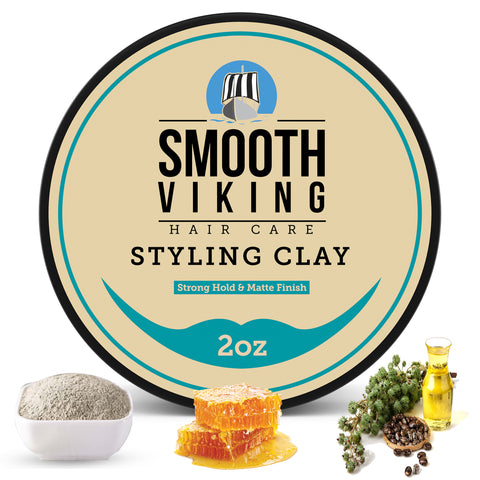
Hair styling clay is better when you want a natural or matte slick back with stronger grip. It is especially useful for thick hair that wants texture and separation instead of a polished, glossy finish. Clay can feel too dry for very coarse or curly hair, though, so start small and work it in thoroughly.
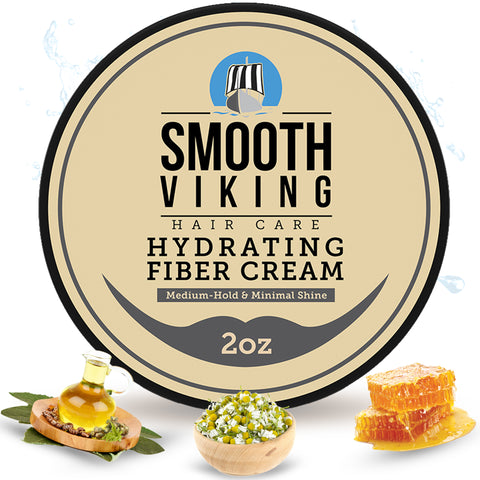
Fiber cream sits in the middle. It gives a softer, touchable hold and a low-shine finish that does not scream, “Yes, I own a comb.” It is a smart choice for fine to medium hair or anyone trying a relaxed slick back rather than a strict, boardroom-ready version.
Smooth Viking hair styling products are made for this exact kind of low-drama control: work a small amount through the hair, shape it, get on with your day. No 14-step ritual. No helmet head.
How to Apply Product Without Overdoing It
Start with a dime-sized amount. Yes, even if you have thick hair. You can always add more, but removing excess product means washing, rewinding, and questioning your choices.
Warm the product between your palms until it spreads evenly. Then work it through the hair from back to front first, reaching the roots and underside. This prevents all the product from sitting on the surface like frosting. Once it is distributed, use your hands to sweep everything backward, then refine the shape with a comb or brush.
A wide-tooth comb creates a looser, more natural slick back. A fine-tooth comb delivers crisp lines and a classic finish. For a fuller style, use a brush at the front to lift the roots slightly before directing the hair back. The best version often has a little height near the forehead and crown, rather than being pressed completely flat.
If your hair starts to separate or fall forward after a few minutes, do not immediately add a fistful of product. First, use the dryer for a quick reset. If it still needs help, add a tiny second layer, focusing only on the problem area.
Match the Slick Back to Your Hair Type
Straight, medium-density hair has the easiest path. A light pomade or fiber cream, a comb, and a quick blow-dry are usually enough. The main risk is making it too flat, so preserve a little lift through the top.
Thick hair needs more preparation and more even product distribution. Blow-dry it backward before styling, then use a higher-hold pomade or clay. If the sides balloon out, ask your barber to remove bulk strategically. Do not try to solve a bad cut with half a container of product.
Fine or thinning hair needs a lighter touch. Avoid high-shine products and overly tight comb lines, which can reveal more scalp than you want. Use a blow-dryer to build lift first, then apply a small amount of matte clay or fiber cream. A textured, pushed-back style is often more flattering than a perfectly plastered slick back.
Wavy or curly hair can wear a slick back well, but it will look different - and that is the point. Rather than fighting every wave into submission, use a moisturizing cream or flexible pomade and let some natural movement remain. A controlled wave looks confident. A crunchy, overworked wave looks like you are losing the war.
Avoid the Four Slick Back Mistakes
The first mistake is starting with dirty, oily hair. Product has a harder time gripping hair that is already coated in yesterday's business. If you do not shampoo daily, at least rinse, dampen, and reset the style before adding more product.
Second, do not pull the hair back so tightly that it exposes every corner of your hairline. A slick back should frame your face, not announce an inspection of it. A bit of lift and softness at the front keeps the look more balanced.
Third, watch the side profile. Plenty of guys nail the front view and forget that the crown is sticking up like a startled porcupine. Check both sides and the back with a second mirror before leaving.
Finally, know when the style has run its course. If your hair is too short, severely layered, or fighting a major cowlick at the front, a looser pushed-back style may serve you better. There is no shame in choosing the version that works with your hair instead of against it.
A slick back is not about looking like someone else. It is about taking the hair you have, giving it direction, and walking out the door like you meant to look that sharp. Start small with product, trust the blow-dryer, and let the mirror tell you when the job is done.