
How to Trim Mustache Evenly Without Guesswork
One rogue mustache hair can turn a sharp look into a guy-who-lost-a-fight-with-his-bathroom-mirror situation. The good news: learning how to trim mustache evenly does not require a barber license, a laboratory, or the steady hands of a Viking ship surgeon. It requires decent light, the right tools, and one rule worth remembering: take off less than you think.
Your mustache is front and center every time you speak, eat, smile, or glare at someone who took your parking spot. A few careful minutes can make it look intentional instead of accidental.
How to Trim Mustache Evenly, Step by Step
Start with a clean, dry mustache. This matters more than most men realize. Wet hair stretches and hangs longer, so trimming it wet can leave you with a mustache that looks fine at the sink and mysteriously too short once it dries. Wash away food, balm, and coffee residue, then pat it dry and comb it into its natural direction.
Stand in front of a well-lit mirror. Overhead bathroom lighting can cast shadows that make one side look fuller or longer than it really is, so face a window when possible or use bright, even light. Keep a second handheld mirror nearby if you want to inspect the angle from both sides.
Comb your mustache straight down first. A fine-tooth mustache comb is your best ally here because it separates the hairs, exposes uneven length, and stops you from trimming based on a few bent or curled stragglers. If your mustache is thick, comb from the center outward as well to see where bulk is building up.
Use a trimmer with a guard for the first pass if you are reducing overall length. Begin with a longer guard than you believe you need. You can always go shorter. You cannot glue back the hair you removed while getting ambitious before breakfast.
Move from the center outward in short, controlled passes. Do one pass on the right, then match it on the left. Do not fully finish one side before touching the other. Alternating sides keeps your eye trained on balance instead of allowing one side to gradually become the "good" side and the other side to become a rescue mission.
After the first pass, comb the mustache down again and step back from the mirror. Look straight ahead with your face relaxed. Do not tilt your head, raise one eyebrow, or pull your lips tight. Your natural resting expression is the only one that matters when judging symmetry.
Set the Bottom Line First
For most mustache styles, the bottom edge is where things go wrong. Hair that spills over the upper lip can look rugged for about ten minutes, then starts collecting lunch like it pays rent there.
Comb the hairs straight down and use mustache scissors or an unguarded precision trimmer to remove only the tips that cross your desired lip line. Work from the center toward one corner, then return to the center and repeat on the other side. Keep your scissors parallel to the lip rather than pointing upward into the mustache. Small horizontal snips create a cleaner line and reduce the risk of cutting a visible notch.
The exact line depends on your style. A classic, tidy mustache usually sits just above the upper lip. A fuller chevron can graze the lip slightly, while a walrus mustache is deliberately longer and needs more patience than frequent cutting. There is no universal best length. The goal is to make both sides look like they belong to the same face.
If you are trimming around the cupid's bow, slow down. That center dip is useful as a visual reference, but it is not always perfectly centered with your nose or teeth. Follow the way your hair naturally grows and judge the overall look, not microscopic geometry.
Match the Corners Without Chasing Perfection
The corners of the mouth are another common trouble spot. One side often grows denser, curls differently, or sits slightly lower because faces are not factory-made action figures. Trying to force perfect mathematical symmetry can leave you cutting more and more until both corners look too thin.
Instead, compare the visual weight of each side. Are the corners ending at roughly the same point? Is one side noticeably fuller? Does one extend below the lip line while the other sits clean? Make one tiny correction, comb again, and reassess.
For a natural mustache, let the corners taper softly. For a sharper style, use the precision edge of your trimmer to define each corner, then check them from arm's length. Close-up grooming is necessary, but close-up judgment can make you paranoid. Nobody sees your mustache from two inches away except you and, possibly, a very determined toddler.
Thin Out Bulk Before You Carve New Lines
An uneven mustache is not always a length problem. Sometimes one side simply has more density. If you keep trimming the long hairs but one half still looks heavier, lightly reduce bulk rather than lowering the entire outline.
Comb the fuller area outward and make a few conservative snips into the ends of the densest hairs. Do not cut deep into the mustache or repeatedly run an unguarded trimmer through one patch. That creates holes, and holes are far harder to hide than a little natural fullness.
This is especially useful for coarse, wiry facial hair. Those hairs can stick out at strange angles even when they are the same length as everything around them. A tiny bit of beard oil or balm can help train them after trimming, but use it after you have cut. Product can make individual hairs clump together and disguise the spots that need attention.
The Tools That Keep Things Civilized
You do not need a drawer full of gadgets. A dependable setup includes a trimmer with adjustable guards, small sharp scissors, a fine-tooth comb, and a clean mirror with good lighting. Dull scissors bend hair before cutting it, which makes precise work harder and invites uneven snipping.
A trimmer is best for taking down overall length and cleaning the edges. Scissors are better for the final detail work around the lip and any hairs that refuse to obey. The comb gives you control, especially if your mustache is thick or curly.
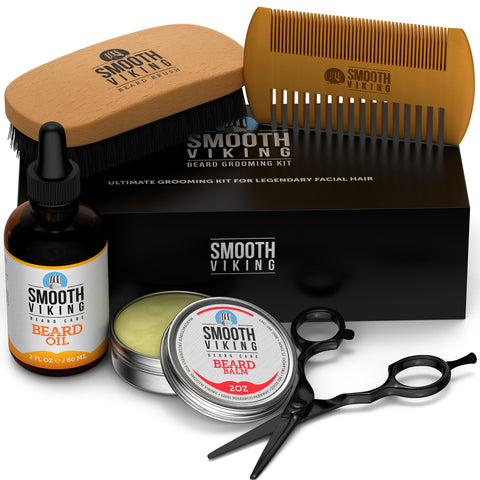
If your facial hair tends to get dry and wild, finish with a tiny amount of conditioning product. Rub it between your fingers first, then work it through the mustache from the center outward. A Smooth Viking beard comb can help distribute it without turning your mustache into a greasy curtain.
Common Mistakes That Create a Crooked Mustache
The fastest way to ruin an even trim is rushing. Avoid trimming when you are late, exhausted, or trying to fix one hair with ten aggressive passes. Facial hair looks different as you move, talk, and change expressions, so give yourself a pause between adjustments.
Another mistake is using the nose as the only center marker. Noses can sit slightly off-center, and mustache growth can be uneven from the start. Compare the distance from each corner of your mouth and the overall width of the mustache instead.
Also, resist trimming immediately after a hot shower if your hair is still damp. Wait until it is completely dry. And if you are growing your mustache out, do not keep lowering the bottom line every few days just because a few hairs have escaped. Snip the outliers and let the main body gain length.
A Two-Minute Maintenance Routine
Once you have the shape you want, maintenance becomes easy. Every morning, comb the mustache down and check for hairs crossing the lip. Every few days, inspect the corners and center line in good light. Every one to two weeks, use your trimmer guard to reset the overall length if your growth rate calls for it.
Men with fast, coarse growth may need a lip-line cleanup twice a week. Guys with finer hair can often go longer. The right schedule is the one that keeps your mustache looking deliberate without making grooming feel like a second job.
When in doubt, stop one snip early. You can always remove another hair tomorrow, but a crooked mustache has a way of announcing itself before you get the chance. Keep the comb handy, make small corrections, and let your face carry the kind of calm confidence that says the details are handled.