
7 Best Beard Oils for Beginners
You can tell when a guy bought his first beard oil based on the wrong logic. He grabbed the bottle with the coolest label, dumped half a dropper into his beard, and spent the day wondering why his face felt greasy enough to fry bacon. That is exactly why finding the best beard oils for beginners matters. A good starter oil should make your beard softer, calmer, and easier to manage without turning your chin into an oil slick.
What makes a beard oil beginner-friendly?
A beginner-friendly beard oil does three things well. First, it softens rough beard hair so your face stops feeling like steel wool. Second, it moisturizes the skin underneath, because beard itch usually starts there. Third, it keeps things simple. You should not need a chemistry degree or a 12-step grooming ritual before work.
The best beard oils for beginners usually have a lightweight feel, a short ingredient list, and a scent that does not punch everyone in the room. That last part matters more than most guys think. A strong scent might sound manly in theory, but if you are brand new to beard care, it is smarter to start with something clean, mild, or unscented. You can always get bolder later once you know what you like.
Texture matters too. Some oils are thick and rich, which can be great for a big, dry beard. But for a beginner, especially a guy with short growth, lighter oils are usually easier to apply and harder to overdo. Less mess, less shine, fewer regrets.
The 7 best beard oils for beginners
1. Unscented beard oil
If you want the safest first pick, start here. Unscented beard oil lets you learn what beard oil actually does without adding fragrance to the experiment. That means no clashing with your cologne, no mystery reaction to a heavy scent blend, and no walking around smelling like a lumberyard exploded.
This is especially smart if you have sensitive skin. Fragrance is not bad by default, but it can be the first thing that annoys reactive skin. An unscented formula gives you the basics - softer beard hair, better skin hydration, less itch - without extra variables.
2. Jojoba-heavy beard oil
Jojoba oil is one of the easiest ingredients for beginners to get along with. It is lightweight, absorbs well, and feels close to the skin's natural oil. Translation: it helps moisturize without leaving your beard heavy or greasy.
A jojoba-heavy blend is a great pick for short beards, patchy growth, and everyday use. It also works well if you are the kind of guy who wants results but does not want to feel like he is wearing a product all day.
3. Argan-based beard oil
Argan oil is a solid choice if your beard feels dry, brittle, or rough even at a shorter length. It tends to add softness and a bit of shine without going overboard. For beginners, that makes it useful when your beard needs taming but you still want a natural look.
The trade-off is that some argan-rich oils can feel slightly richer than ultra-light blends. If your beard is very short or your skin already runs oily, you may prefer jojoba as your starting point. But if your whiskers are stubborn and coarse, argan can be your beard's peace treaty.
4. Beard oil with sweet almond oil
Sweet almond oil often shows up in balanced formulas, and for good reason. It brings a nice middle ground - not too light, not too heavy. That makes it one of the easiest ingredients for a first-timer who is not sure what his beard needs yet.
This type of oil is often good for general softness and reducing that rough, scratchy texture that annoys both you and anyone close enough to notice. If your goal is to make your beard feel more civilized fast, this is a strong lane.
5. Light woodsy-scented beard oil
A mild cedar, sandalwood, or pine scent can be a great beginner move if you want your beard care to feel a little more Viking and a little less pharmacy aisle. The key word is light. A subtle woodsy scent feels clean, masculine, and easy to wear daily.
A heavy scent, on the other hand, can become a problem fast. Beginners often assume more scent equals more quality. Not true. A good beard oil should support your routine, not announce itself three rooms ahead of you.
6. Beard oil for sensitive skin
If your skin gets irritated easily, do not play hero. Go straight for a formula aimed at sensitive skin, ideally with simple carrier oils and minimal fragrance. The best starter experience is the one that keeps your face calm.
This kind of beard oil is also useful if shaving or trimming already leaves your skin annoyed. When the skin under your beard is healthy, the beard itself usually looks better too. That is the part a lot of beginners miss. Beard care is not just about the hair. It is also about the terrain underneath.
7. Starter beard oil in a grooming kit
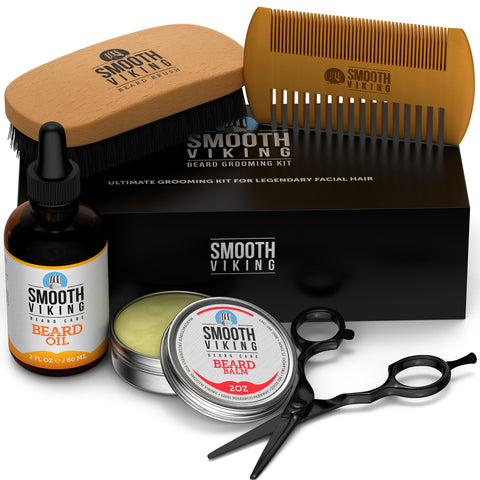
For some guys, the best beard oil is the one that comes with the rest of the game plan. A beginner grooming kit can make a lot of sense if it includes an oil, a comb or brush, and maybe a balm for extra control later on. It removes guesswork and keeps your routine low drama.
This works especially well if you are building habits from scratch or buying a gift for a guy whose beard routine currently consists of hoping for the best. Smooth Viking leans into this kind of practical setup because it helps guys get visible results without turning grooming into homework.
How to choose the best beard oils for beginners
Start with your beard length. If your beard is short or still filling in, lighter oils usually work best. They absorb quickly and help with itch without making the beard look wet. If your beard is thicker or feels rough, a slightly richer blend can do more heavy lifting.
Next, think about your skin. Dry, flaky skin under the beard usually benefits from daily oil use with ingredients like jojoba, argan, or almond oil. Oily or acne-prone skin often does better with lightweight formulas and a lighter hand during application. More oil is not always better. Usually, it is just more shiny.
Then there is scent. If you wear cologne, go unscented or mild. If you do not wear fragrance and want your grooming routine to carry a little swagger, a subtle woodsy or fresh scent can work well. Just keep it controlled. Your beard should smell good up close, not dominate the elevator.
Ingredients worth looking for and what to avoid
Good beginner oils tend to keep things clean and simple. Jojoba oil, argan oil, sweet almond oil, grapeseed oil, and vitamin E are all common picks that help soften hair and support the skin underneath.
What should make you pause? Super heavy formulas if your beard is short. Very strong synthetic fragrance if your skin is sensitive. And anything that feels more like perfume than grooming product. Fancy packaging is nice, but your beard does not care what the bottle looks like.
It also helps to watch out for formulas that leave a sticky or greasy finish. A beard oil should make your beard feel healthier and easier to handle. It should not make you want to wash your face an hour later.
How to use beard oil without screwing it up
Use it after a shower or after washing your face, when your beard is clean and slightly damp. That is the sweet spot. Put a few drops in your palm, rub your hands together, and work the oil into the beard and down to the skin.
For short beards, two to three drops is often enough. For medium beards, try three to five. If you have a bigger beard, you may need more, but start lower than you think. You can always add a drop. Taking away grease is a different story.
Once the oil is in, use your fingers, a comb, or a brush to spread it evenly. Done. No ritual chanting. No beard sorcery. Just consistent use.
Common beginner mistakes
The biggest mistake is using too much. The second biggest is expecting beard oil to force growth in empty patches. Beard oil helps condition the beard you have and keeps the skin healthy. It does not magically turn your face into a wilderness map overnight.
Another common mistake is quitting too early. Beard oil is not a one-time fix. Most guys notice the biggest payoff after a few days of regular use, especially with itch, dryness, and softness. Consistency wins this fight.
And finally, do not judge an oil by the first ten minutes. Some formulas feel richer at first and settle in nicely after a little time. Give it a fair shot before you banish it from the beard kingdom.
A beginner does not need the fanciest bottle or the most intense scent on the shelf. He needs a beard oil that makes his routine easy, his beard softer, and his face a little less angry. Pick simple, use a small amount, and let your beard get its act together one drop at a time.