
Beard Grooming Essentials for Men That Work
A beard can make you look sharper, tougher, or a little more put together - but only if it looks like you meant to grow it. That’s where beard grooming essentials for men come in. The goal isn’t to build some 12-step bathroom ritual fit for a Norse king with unlimited free time. It’s to keep your beard clean, soft, shaped, and under control without turning your sink into a barbershop.
The beard grooming essentials for men actually need
Let’s cut through the fluff. Most guys don’t need a shelf full of mystery jars. They need a few dependable tools and products that handle the big problems: itch, dryness, wiry texture, bad shape, and that wild-man neck growth that shows up when nobody asked for it.
Start with beard wash. Regular shampoo can strip your beard and the skin under it, which is great if your goal is to feel like a tumbleweed. Beard hair is coarser than the hair on your head, and the skin underneath is easy to dry out. A proper beard wash cleans off sweat, food, and daily grime without leaving your face tight and flaky.
Then comes beard oil. If your beard feels rough, looks dull, or makes your face itch like crazy, oil is usually the fix. A few drops help soften the hair, calm the skin, and add a healthier look without making you shiny like a car hood. Beard oil is especially useful in the early growth stage, when stubble starts acting like sandpaper.
Beard balm is your next workhorse. Oil conditions, but balm adds a little control. If your beard sticks out at odd angles or gets puffy by lunchtime, balm helps shape it and keep things looking intentional. It’s not cement, and that’s a good thing. You want hold with flexibility, not a beard helmet.
A comb and brush matter more than a lot of guys think. A beard comb helps detangle and distribute oil or balm through the beard. A brush, especially one with firmer bristles, helps train the hair to grow in the direction you want while exfoliating the skin underneath. Comb for precision. Brush for control. Use both if your beard has some real volume.
And yes, you need a trimmer or at least a good pair of grooming scissors. Even if you’re growing it out, you still need cleanup. Split ends, uneven bulk, and stray cheek or neck hairs can make a solid beard look accidental fast.
Build a routine, not a part-time job
The best grooming routine is the one you’ll actually do on a Tuesday morning when you’re half awake and late. For most men, beard care doesn’t need to be complicated.
Wash your beard a few times a week, not necessarily every single day. If you work out hard, sweat a lot, or work outside, you may need to wash more often. If your skin runs dry, every day can be too much. That’s where the trade-off comes in. Clean is good. Stripped and flaky is not.
After washing, pat the beard dry. Don’t go full rage mode with the towel. Wet beard hair is more vulnerable, and rough drying can make frizz worse. Once it’s damp or dry, work in beard oil. Start small. You can always add another drop, but overdoing it leaves your beard heavy and greasy.
If your beard is medium to long, or naturally unruly, follow with balm. Warm a small amount in your hands and work it through, then shape with a comb or brush. A quick pass with a blow dryer on low heat can help train the beard into place if it tends to puff out. That said, heat is useful in moderation. Blast your beard every day like you’re forging steel, and dryness can creep back in.
Trim as needed, not just when things get out of hand. For some men, that means once a week. For others, every couple of weeks is enough. The key is maintenance. It’s easier to keep a beard sharp than to rescue one that’s gone full mountain hermit.
What each essential product really does
A lot of grooming confusion comes from guys buying products with overlapping jobs. Here’s the plain-English version.
Beard wash cleans without stripping. If your beard feels dirty, smells like lunch, or the skin underneath is breaking out, start here.
Beard oil hydrates and softens. It’s best for itch, dryness, flaking, and making coarse hair feel more civilized.
Beard balm conditions too, but adds shape and light hold. It’s the move when your beard needs a little discipline.
A beard comb helps with detangling, parting, and even product distribution. It’s especially useful after oil or balm.
A beard brush helps train the beard and smooth the surface. Shorter beards often benefit from brushing more than combing, while fuller beards usually want both.
Trimmers and scissors keep your lines clean. Use a trimmer for broad cleanup and scissors for detail work where one wrong move doesn’t need to become a whole new beard style.
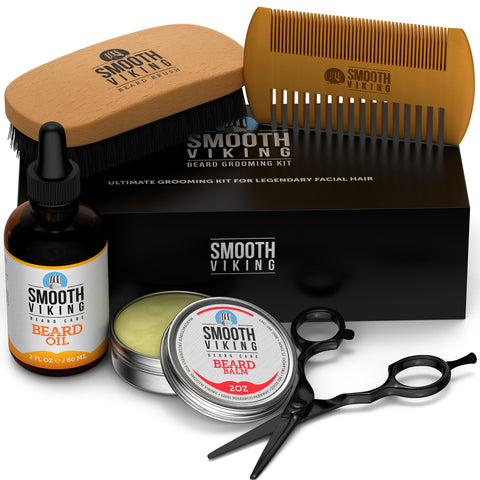
If you’re shopping smart, a beard grooming kit can make sense. It gives you the basics in one shot and keeps you from buying random products that don’t work well together. Smooth Viking built its reputation on exactly that kind of no-nonsense setup - solid gear, practical products, and no sacred oath required.
Common beard mistakes that make a good beard look bad
The first mistake is using too much product. More oil does not equal more handsome. If your beard looks wet two hours later, you went too hard. Start light and build.
The second is ignoring the skin under the beard. A beard sits on your face, not in midair. If the skin is dry, clogged, or irritated, the beard won’t look its best no matter how much balm you slap on top.
Third is trimming the wrong areas. A lot of guys get scissor-happy on the front and leave the neckline looking like an afterthought. The neckline matters. So do your cheek lines. Clean edges make almost any beard style look more deliberate.
Another classic mistake is expecting one routine to work all year. Winter usually means more dryness and static. Summer can mean more sweat, oil, and washing. Your beard routine should shift a little with the season, your skin, and even your beard length.
How to choose the right essentials for your beard type
Not every beard needs the same game plan. Short beards and stubble usually need more skin care than styling. Beard oil, a brush, and occasional trimming do a lot of the heavy lifting there.
Medium beards usually need the full starting lineup: wash, oil, balm, comb, and regular shaping. This is the length where your beard starts to show both its strengths and its bad habits. A little control goes a long way.
Longer or thicker beards often need more conditioning and more patience. You may need extra oil, more brushing, and more careful trimming to avoid bulk in the wrong spots. Longer beards also collect more dust, food, and nonsense from daily life, so washing technique matters even more.
Texture matters too. Coarse, curly beards are more prone to dryness and tangles. Straight beards may show uneven density more clearly and can look scraggly if they aren’t shaped. Patchy beards benefit from cleaner lines and shorter lengths. That’s not surrender. That’s strategy.
The real goal: control without overdoing it
Good beard grooming isn’t about making your face look overworked. It’s about control. A soft beard feels better, looks better, and is a lot less likely to make your skin miserable. A shaped beard frames your face instead of swallowing it. The right tools make you look put together without making you feel like you need a grooming spreadsheet.
That’s why the essentials matter. Not because grooming needs to be fancy, but because it should be effective. A wash that cleans without stripping. An oil that softens. A balm that keeps the beard in line. A comb and brush that help you shape what you’ve got. A trimmer that keeps the whole operation from drifting into chaos.
You don’t need to worship at the altar of beard care. You just need a routine that keeps your beard from looking like it lost a fight with the wind. Start simple, stick with what works, and give your beard the kind of maintenance that makes people think, this guy’s got it handled.